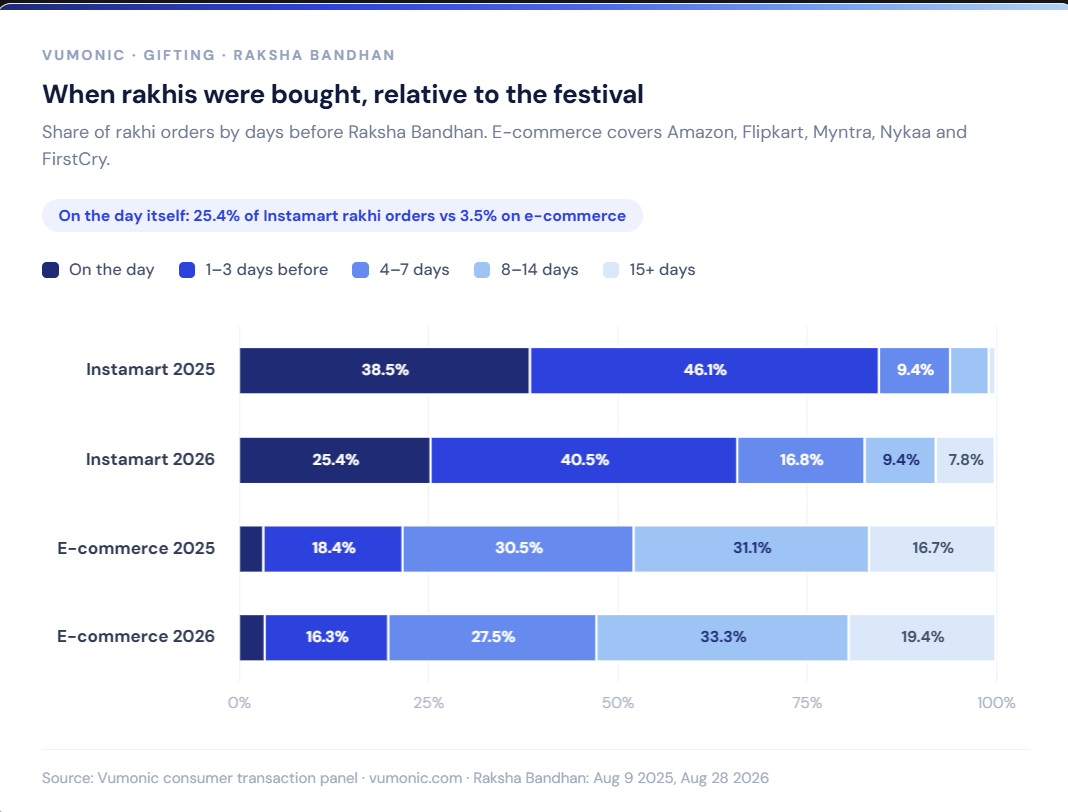
On Amazon, Flipkart and the other e-commerce platforms in the panel, 3.5% of rakhi orders in 2026 were placed on Raksha Bandhan itself. On Instamart, 25.4% were.
The two channels are selling the same product to meet the same deadline, on completely different timelines.
43
On e-commerce, the rakhi season is long and steady. The busiest stretch was four to eight days before the festival. Over half of all e-commerce rakhi orders were placed more than a week out, and almost a fifth came more than two weeks early. That shape barely changed from 2025, when Raksha Bandhan fell on August 9 instead of August 28: the share bought in the final three days held near 20% both years.
Instamart is where the last-minute buying happens. In 2025, 38.5% of its rakhi orders came on the day of the festival and another 46.1% in the three days before it. Nearly 85% of Instamart's rakhis sold in the final four days.
2026 looked different. The share bought on the day fell to 25.4%, and the share bought four or more days ahead more than doubled, from 15.4% to 34.0%. Instamart is still the channel for the final push, but it now picks up a meaningful slice of early buyers too, a group that used to sit almost entirely on e-commerce.
The practical split for a rakhi or gifting brand is clear. E-commerce needs inventory and visibility in place two weeks out, with the peak landing roughly a week before the festival. Quick commerce needs stock in dark stores for the last 72 hours, and increasingly for the week before that as well. A brand that plans one calendar for both channels will be early on one and late on the other.
Tags: Quick commerce · Instamart · E-commerce · Raksha Bandhan · Gifting · Festive 2026 · Consumer panel data
Get in touch with us for SKU-level insights for your category at vumonic.com