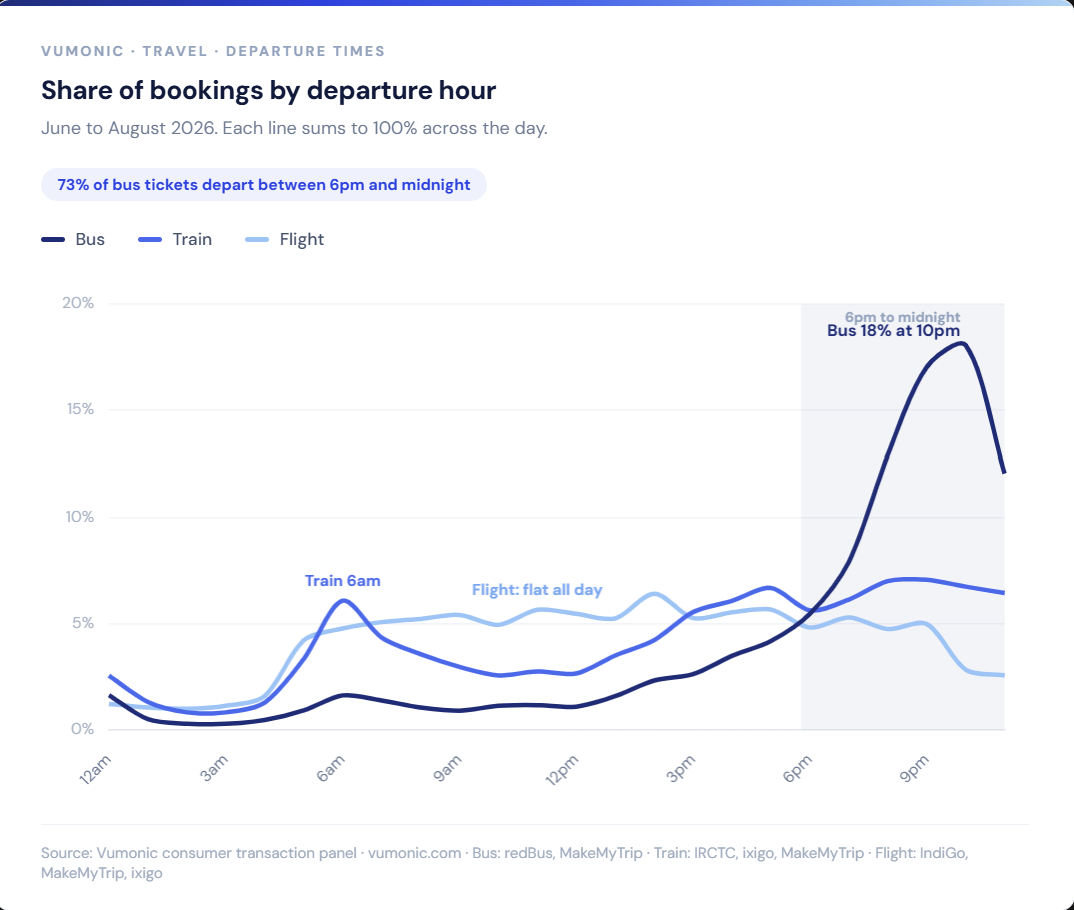
73% of bus tickets booked between June and August were for departures between 6pm and midnight. The single busiest hour was 10pm, carrying 18% of all bus departures on its own. Before 11am, buses barely run. Every hour from 5am to 11am holds under 2% of bookings.
42
Flights are the opposite. From 5am to 10pm, every single hour carries between 4% and 6.5% of flight bookings, with no real peak. The busiest hour, 2pm, is only marginally ahead of 8am or 5pm. 89% of flights booked in the panel depart inside that 17-hour band. Only 11% leave between 10pm and 5am. Trains do both. There's a clear morning spike at 6am, carrying 6.1% of bookings, then a quieter midday, then a long evening build. 57% of train departures leave between 3pm and midnight, peaking at 9pm. The overnight train is still the dominant format, just less extreme than the overnight bus. The pattern follows what each mode is actually selling. A bus ticket is mostly a bed for the night, timed to arrive in the morning. A flight is a short hop that fits around the working day, so demand spreads evenly across it. A train sits in between: long-distance sleeper services leave in the evening like buses, while intercity day trains pick up the early-morning slot. For anyone building around travel demand, from station retail to cab supply to hotel check-in timing, the three modes deliver people at completely different times. Bus passengers land in a narrow early-morning window. Flight passengers arrive steadily through the day. Train arrivals split between morning and late evening. Tags: Travel · IRCTC · redBus · IndiGo · MakeMyTrip · Departure times · Consumer panel data Get in touch with us for SKU-level insights for your category at vumonic.com